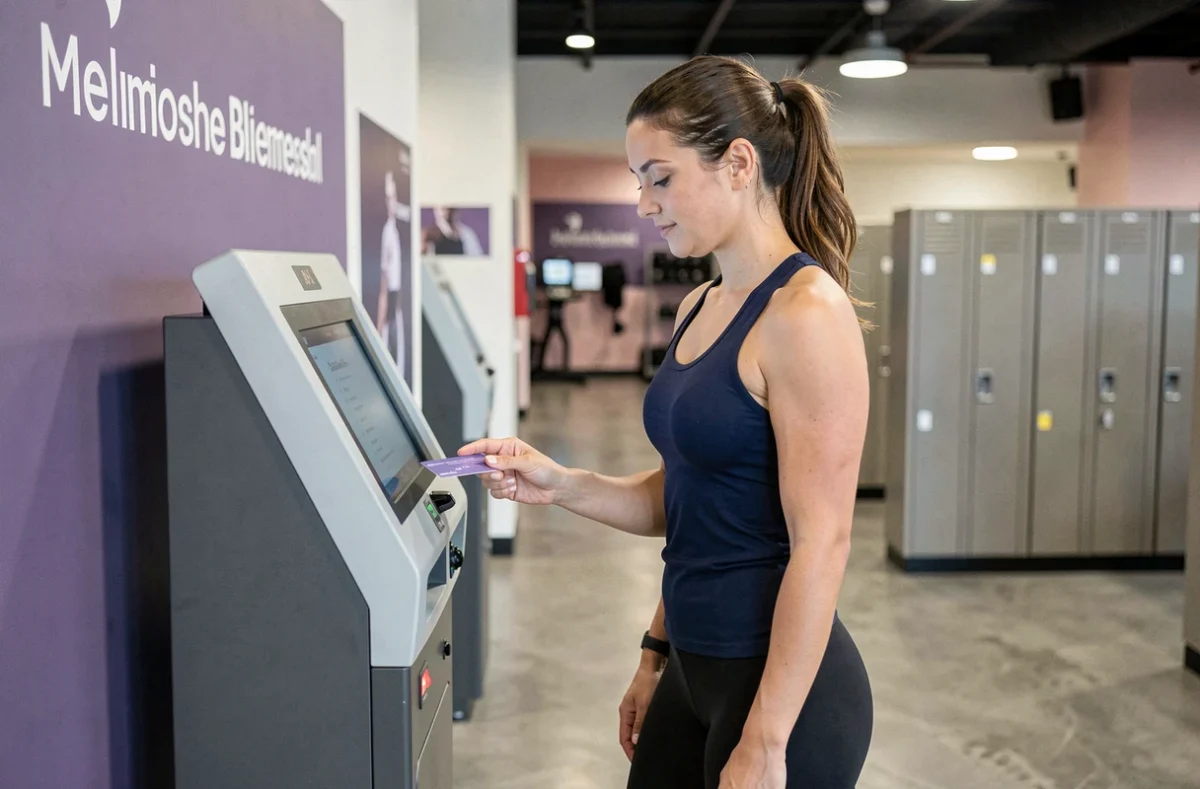
You are looking at the pricing page of Basic-Fit and you see a price displayed “every four weeks.” This detail changes everything: four weeks is not a month. Over a full year, you pay not twelve but thirteen payments instead of twelve, which significantly alters the actual bill. Understanding this billing logic is the first reflex to have before choosing your plan.
Billing every four weeks: the real annual cost of a Basic-Fit subscription
Most gyms bill on a calendar month basis. Basic-Fit operates differently, on four-week cycles. The calculation is simple: a year has fifty-two weeks, which equals thirteen cycles of four weeks.
In concrete terms, if the displayed rate is a few dozen euros per cycle, the annual amount corresponds to that rate multiplied by thirteen. A subscription that seems inexpensive every four weeks actually costs a thirteenth more than a standard monthly subscription at the same face value. Before comparing Basic-Fit to another brand, always convert the rate to an overall annual cost.
To view the details of each plan and check the updated prices, you can find the Basic Fit subscription offer on 1001 Sports which summarizes the differences between plans.

Premium or Ultimate subscription: what really changes day-to-day
Basic-Fit primarily offers two levels of subscription. Their names may vary over time, but the logic remains the same: a basic plan and an extended plan.
The entry-level plan
This gives access to a single club, the one you choose at registration. You can use all the strength and cardio equipment in that club, as well as the Basic-Fit app to track your sessions.
This plan is suitable if you live or work near a specific club and do not need to vary your training locations.
The extended plan
This opens access to all clubs in the Basic-Fit network, in France as well as in other European countries where the brand is established. It is also this plan that generally includes virtual group classes, the ability to invite a friend for a session, and additional features on the app.
The price difference between the two plans remains moderate when compared to a cycle. Multi-club access is genuinely beneficial if you travel often or enjoy varying your training environments.
Flex option and commitment: the cancellation conditions to know
Have you noticed the “Flex” mention on some offers? This option removes the commitment period, but it comes at a cost. The Flex option represents a significant additional cost compared to the introductory rate, added to each billing cycle.
Without this option, the subscription is subject to a commitment, usually for one year. During this period, early cancellation is governed by strict conditions:
- A notice period of at least one four-week cycle must be observed for any cancellation request.
- During the first year, early exit is only possible for certain reasons: permanent medical unfitness or moving more than two kilometers from the reference club, with supporting documents to provide.
- The fourteen-day withdrawal right exists, but if you have already used the subscription during this period, Basic-Fit may retain a sum proportional to the service consumed.
Why is this point often a source of disputes? Because many new members confuse “no commitment” with “Flex option”. The prominently displayed introductory rate almost always corresponds to the plan with commitment. The no-commitment option costs more with each payment.

Basic-Fit prices compared to competing gyms: what the low price implies
Basic-Fit offers some of the lowest prices in the French gym market. This positioning is not accidental. The business model relies on a denseness of the network and a high number of members per club.
In practical terms, this means that gyms largely operate without permanent staff on the weight training floors. Human supervision is limited, group classes are mostly virtual (broadcast on screen), and the locker rooms remain functional without wellness space.
Comparing Basic-Fit’s rate to that of a brand like Fitness Park or L’Orange Bleue only makes sense by factoring in these service differences. Here are the criteria that truly weigh in the choice:
- The presence or absence of coaches on the floor during your usual training hours.
- Access to in-person group classes with an instructor, or only in video format.
- The ability to bring a friend for free, reserved for the extended plan at Basic-Fit.
- Geographical proximity: a cheaper subscription at a club forty minutes from your home loses all its advantage.
A low price does not reflect poor service. It indicates a model where the autonomy of the practitioner replaces individual support. If you already know how to train alone and are looking for free access to reasonably good equipment, the value for money remains hard to beat.
Basic-Fit app and virtual classes: often underestimated included services
The mobile app is an integral part of the subscription. It offers structured training programs, session tracking, and access to virtual classes depending on the chosen plan.
The virtual classes are broadcast in the gym on a large screen, with scheduled slots throughout the day. They cover various disciplines: strength training, yoga, cardio, stretching. The extended plan also gives access to these classes from home via the app.
For a beginner practitioner, the app partially compensates for the absence of individual coaching. The guided programs help structure the first weeks without feeling lost in front of the machines.
The trap would be to pay for the extended plan solely for the virtual classes without ever using them. Before choosing, test your own discipline: will you actually follow video sessions at home, or do you prefer the collective atmosphere of a class in the gym with a physically present coach? The answer to this question determines the plan that suits you, much more than the price difference between the two.