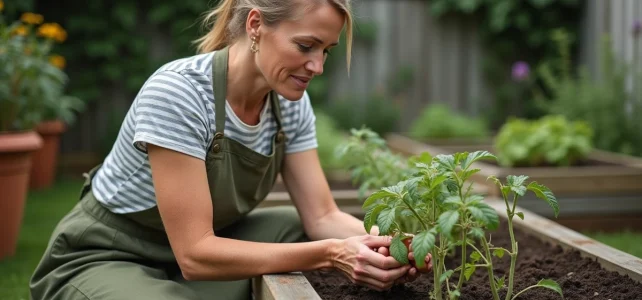
French gardening is undergoing a silent transformation that goes far beyond the usual seasonal advice. With the rise of urban gardening as a structuring practice, the decline of landscape minimalism, and the evolution of tools towards compactness, the subtle signals of 2026 are reshaping the priorities of savvy gardeners.
Compact tools and mindful purchasing: how urban gardening is changing things
The urban gardener no longer buys like a rural gardener. According to a STIGA/YouGov study reported in 2026, practitioners on balconies, terraces, and small spaces are directing their purchases towards compact tools that prioritize value for money. The logic of versatility is replacing that of specialization.
Related reading : All the news and practical advice for pharmacy professionals
We observe a clear shift: distributors’ catalogs are expanding their ranges of ergonomic pruners, modular raised beds, and watering systems suited for micro-surfaces. The decisive criterion is no longer power or brand, but size and durability.
To stay informed about these equipment and practice developments, regularly consulting the gardening news on Clic Garden allows one to spot new products before they saturate the shelves of large retailers.
Related reading : The latest news and trends analyzed by Aaron Nouchy and his team
This shift towards compactness has a direct consequence on maintenance: less space means shorter crop rotations in the vegetable garden, more frequent pruning of shrubs, and increased attention to every available square meter.
Cottage style versus minimalism: why lush gardens are taking over in 2026
Landscape minimalism is declining. Several specialized sources, including Mon Jardin Ma Maison, confirm that the cottage garden style is prevailing over clean lines. Landscape professionals validate this shift towards denser, more textured compositions, where perennials mix with grasses and old roses.
This movement is not just aesthetic. A lush garden offers more ecological niches for beneficial insects, pollinators, and soil microfauna. Biodiversity benefits without additional intervention from the gardener.
Adapting lushness to a small space
Transposing the cottage style onto a few square meters of terrace requires discipline. We recommend working in vertical layers:
- A climbing plant (clematis, star jasmine) on a trellis to occupy height without encroaching on the ground
- Low perennials in pots (perennial geraniums, lady’s mantle) that naturally overflow from their containers
- One or two compact shrubs (panicle hydrangea, butterfly lavender) to structure the whole
A common mistake is to multiply species without a coherent flowering period. A successful cottage garden features blooms from spring to autumn, which requires a planting schedule thought out from the point of purchase.
Mental well-being and vegetable gardening: gardening as a health practice
The STIGA/YouGov study highlights a fact that gardening media still address too little: the majority of urban gardeners associate their practice with an improvement in mental well-being. Growing fruits or vegetables is seen as beneficial for morale, not just for the plate.
This dimension changes how gardening news is followed. The content that resonates is no longer just technical sheets on tomato maintenance or fruit tree pruning. Gardeners seek experiences related to the pace of life in the garden, managing time spent outdoors, and the concrete impact of this activity on their daily lives.

What this means for gardening news monitoring
The preferred sources of information are evolving accordingly. A good follow-up of gardening news in 2026 intersects several types of content:
- French specialized media (Le Figaro Jardin, Au Jardin) for phytosanitary alerts and regional events
- Sector studies (STIGA/YouGov, polling institutes) to understand underlying trends in practices and purchases
- Professional landscapers’ accounts on social media, showing real-time plant associations and design mistakes
The proliferation of gardening podcasts, such as those broadcast on Radio France, offers a passive monitoring format particularly suited to gardeners who spend time with their hands in the soil.
Rewilding and biodiversity in the garden: beyond the discourse
Rewilding appears on all trend lists for 2026. In practice, allowing an area of the garden to evolve freely means accepting a controlled visual disorder. This does not mean abandoning a piece of land, but consciously deciding not to mow a grassy strip, allowing certain plants to go to seed, and tolerating nettles that feed butterfly caterpillars.
The difficulty lies in neighborhood relations and municipal regulations. Several French municipalities still strictly regulate vegetation height at property boundaries. Before rewilding, we recommend checking local urban planning regulations and, if necessary, discussing with the town hall.
Rewilding works best when it coexists with maintained areas. A garden entirely left fallow loses its clarity and quickly discourages its owner. The most sustainable approach is to reserve a fraction of the total area, clearly defined, for this natural dynamic.
Following gardening news in France now involves multiple angles: equipment, landscape aesthetics, mental health, biodiversity. Gardeners who intersect these sources make better purchasing, planting, and maintenance decisions, season after season.