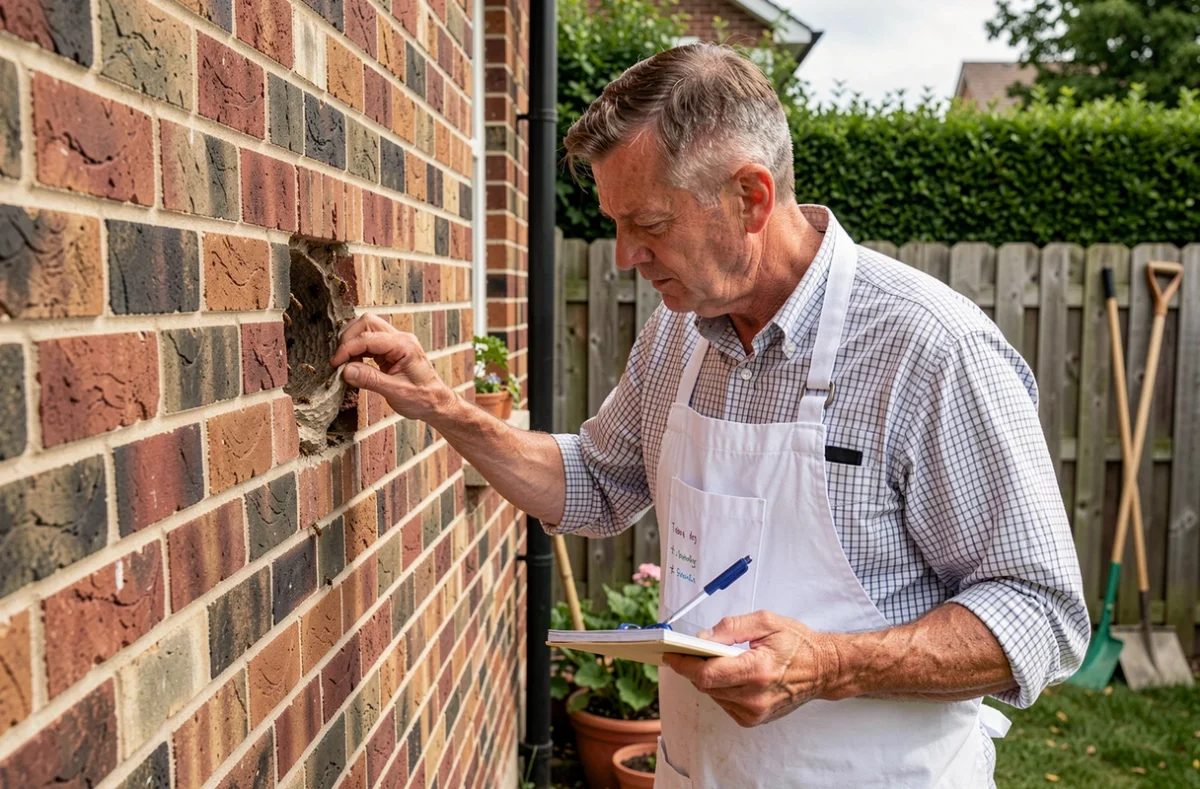
When the butcher discovered a wasp nest in a wall of his house, he wondered what the best way to deal with this problem was and how to ensure his personal protection against wasp stings. In this article, we will examine the advice given by the butcher on how to effectively get rid of the wasp nest while avoiding fires, as well as practical information on how a wasp infestation works and how to eliminate it properly to prevent another occurrence in the near future.
Understanding the Dangers of Wasps
Wasps pose a significant threat to the health of humans and animals. These insects can sting, which can cause severe allergic reactions in some people sensitive to their sting. In some cases, their stings can even be fatal – which is why it is vital to address a wasp nest when you find one in your home or on the land you own.
In addition to the danger wasps pose to human health, they also present a potential threat to your property. Built wasp nests typically contain a lot of dry wood and other flammable materials that can easily catch fire if exposed to enough heat or direct flames. More seriously, if the nest is attached to the exterior or interior wall of your house, it may have already caused significant structural damage to the buildings in question – putting their stability at risk!
Once you understand the importance of identifying and quickly addressing an effective wasp nest, you will be well-positioned to take action successfully. Here are some important tips to follow:
1 – Accurately identify exactly where the nest is located. If it is attached to an interior/exterior wall, mark its location with some non-woven tape or ribbon, so you know exactly where it is situated.
Preparing the Necessary Tools
The tools needed to deal with a wasp nest can vary depending on the type of wall it is located in and where it is situated. However, a few essential items are generally required to effectively exterminate the wasps.
First, you will need adequate and sufficient protection to minimize the risk of stings (thick leather gloves, long pants, and a long-sleeved shirt). Additionally, make sure that your person is well-covered as wasps can be very aggressive if they sense a potential threat.
Determining the Size of the Nest
When it comes to dealing with a wasp nest, it is important to properly assess the size of the problem before taking any action. If you have found that a nest is inside a wall in your home, here’s how to proceed to determine its size:
The first step is to identify the approximate location of the nest. You can do this by thoroughly inspecting the nearby exterior and interior walls. If you are unable to precisely locate the nest, try to see if any tunnels are being dug by the bees on the surface of the wall. Again, watch the area closely as these tunnels may indicate that the nest is located just behind that specific point. Additionally, be attentive to odors as an unusually high concentration of smells around the site may signal the presence of a nearby wasp nest. Once you have roughly identified its location, it is time to move on to the second stage, which involves estimating its size and relative depth:
Use an ultrasonic device to quickly and effectively measure this crucial indicator that will guide your choice of the appropriate insecticide product you will need to use to permanently resolve this annoying problem. These devices allow for safe use without additional toxicities, providing good auditory perception of the ultrasound emitted, among other things, by an active underground hive.
Eliminating the Wasp Nest
Eliminating a wasp nest can be a challenging and dangerous task. Improper treatment of the nest can lead to serious injuries or their reproduction and future damage. Therefore, it is important for homeowners to take the appropriate measures to avoid these dangers, and knowing how to effectively treat a wasp nest is essential. Below, I will explain step by step how to safely get rid of it.
First, before you start treating the nest with insecticide products, it is important to find the exact source of the problem. This means precisely locating where the nest is situated to ensure it is properly treated in one go without the risk of subsequent reinfestation.