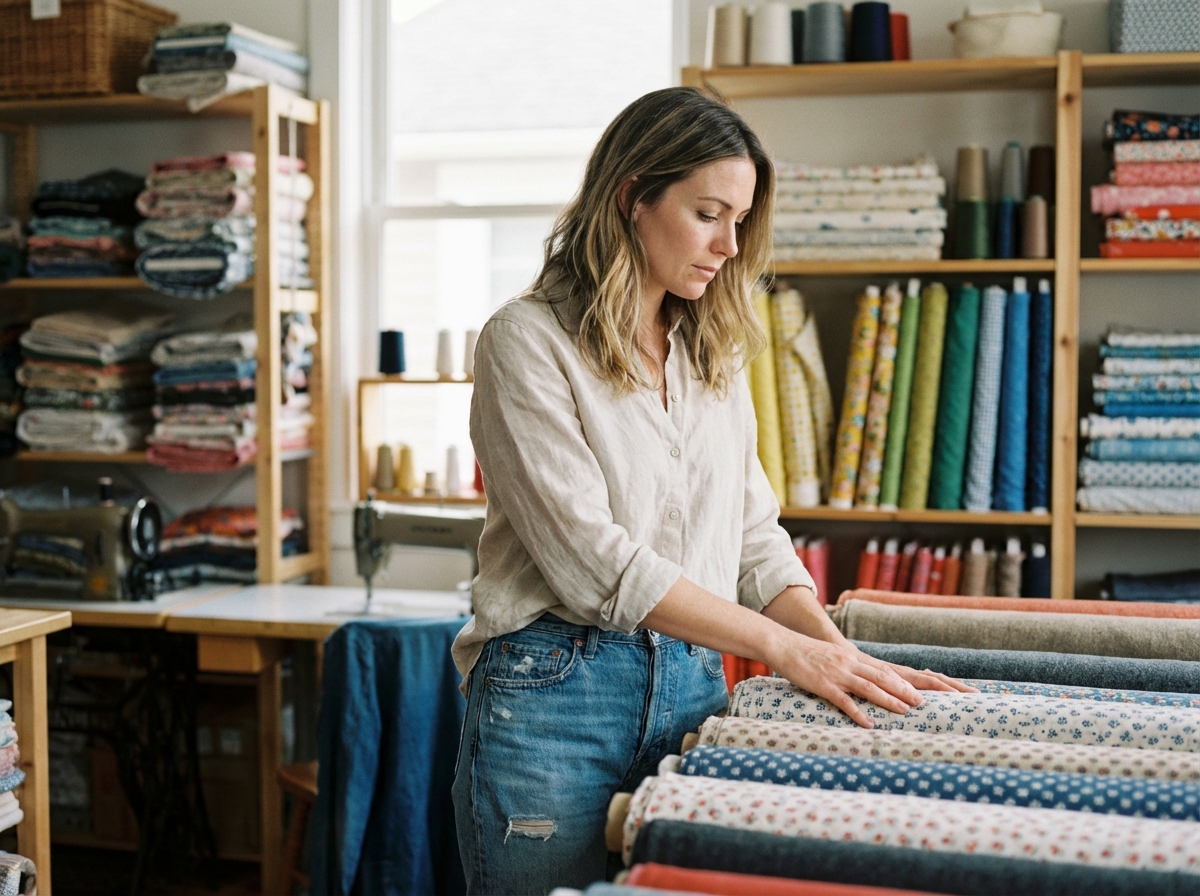
A high-quality cotton withstands more than 50 washes without visible alteration, while low-quality polyester can pill from the first use. Viscose, although classified as a natural fiber, undergoes a chemical process similar to that of nylon. The same patterns can yield opposite results depending on the elasticity of the chosen fabric.
Interfacing does not adapt to all materials, complicating the assembly of certain technical textiles. Eco-certifications do not systematically eliminate irritating additives. Each fabric choice therefore involves compromises between durability, comfort, and aesthetic appeal.
What are the truly essential criteria for choosing a fabric suitable for your project?
Finding the perfect fabric for your next clothing creation requires careful consideration of the project’s needs. The choice is not based solely on appearance but on the suitability between the material, weight, and the function expected from the garment. Ask yourself about the desired structure: soft drape or defined hold? A flowy textile enhances a summer dress, while thick cotton provides reassurance for a jacket.
Here are the aspects to examine to select the right fabric based on your project:
- Weight: it determines resistance and opacity. A high weight gives body, ideal for pants or jackets. Conversely, a lightweight poplin is suitable for airy shirts.
The material influences comfort, breathability, and garment care. The most common are:
- Material: cotton, linen, viscose, or synthetic fibers do not offer the same comfort, breathability, or care.
Always adapt the fabric to the chosen pattern to ensure a result faithful to the initial idea:
- Compatibility with the pattern: each pattern requires a specific fabric. A jersey for a stretchy cut, a canvas for a crisp structure.
The texture, absorption capacity, and ease of sewing also come into play. If you are considering a custom t-shirt, the weight remains a determining criterion: the dedicated page “What weight of fabric for a custom t-shirt? – Rennes Blog” offers useful insights for making the right choice. High-quality natural fibers ensure comfort and longevity, while some technical fibers simplify maintenance or promote moisture wicking.
Consider the season in which the piece will be worn. Wool protects from the cold, while linen brings freshness in summer. Finally, consider the use of the garment: everyday wear or special occasion? Taking the time for this analysis avoids many disappointments and ensures a garment that truly meets your expectations.
Overview of fabrics: understanding materials, textures, and specifics
The choice of different types of fabrics shapes the success of the project. Each textile material is distinguished by its unique properties. Cotton, a versatile natural fiber, is available in both lightweight poplin and stretchy jersey. Poplin, smooth and fine, is particularly suitable for summer shirts and dresses. Thick cotton, on the other hand, is suitable for pants and jackets that require structure.
Viscose, made from regenerated fibers, is known for its softness and fluid drape: it is ideal for all pieces that require movement. Linen, recognized for its ability to allow the skin to breathe, finds its place in the summer wardrobe: it absorbs moisture and promotes air circulation. Synthetic fibers such as polyester or elastane, on the other hand, offer durability, flexibility, and ease of maintenance, making them allies in many sportswear garments.
To help you navigate, here are some families of fabrics and their preferred uses:
- Cotton poplin: recommended for structured garments, it is pleasant to the touch.
- Viscose: to be favored for loose dresses or blouses, it guarantees a fluid and light effect.
- Linen: essential for light and airy creations intended for the beautiful season.
- Synthetic blends: perfect for technical jackets or sportswear, they combine technicality and durability.
The weight and texture guide the final selection. The market offers a wide range, from natural fabric to technical textile, to meet all requirements. Knowing how to decipher the specifics of each material ensures the combination of aesthetics, comfort, and functionality in every sewn piece.

How to connect your creative desires and fabric choice for a successful result?
At the origin of a garment, there is an idea, a drawing, sometimes the silhouette of a pattern. But for the project to come to life, the choice of fabric must resonate with the inspiration. A sewing pattern designed for a full skirt requires a soft and fluid fabric: viscose or lightweight poplin will effortlessly accompany every movement. Conversely, a structured jacket requires a material that holds its shape, such as cotton twill or wool.
The intended use also guides the selection. For a garment meant to be worn often, it is better to opt for a solid and easy-care textile: cotton, denim, some blended synthetics. For an exceptional creation, let creativity shine: precious materials, textured patterns, bold prints.
To guide your choices, keep these points in mind:
- Adapt the weight of the fabric to the season and cut, lighter for summer and denser when temperatures drop.
- Check the compatibility between the material and the pattern, as some designs require specific elasticity or rigidity.
- Consider care needs: linen or wool do not appreciate harsh treatment.
The success of a clothing creation relies on the balance between the initial idea, the selected textile material, and the final use. On the cutting table, the fabric is never just a support. It embodies the project, translates the pattern maker’s gesture, and gives the piece its personality and longevity. The choice of fabric, far from being a detail, is the first step towards a garment that truly tells a story.